The Next Two Years of Software Engineering
Table of Contents
开篇
“软件行业正处在一个相当微妙的拐点上!”
“未来几年,将决定我们是用速度换掉理解,还是把理解变成新的护城河。”
在他的博客《未来两年的软件工程》一文中,作为在 Google 内部亲手推动Gemini、Vertex AI 和 Agent Development Kit与开发者工作流结合的负责人,Addy 并没有急于给出明确的答案。
 The software industry sits at a strange inflection point
相反,他将软件工程拆分了5个残酷的问题。
要判断未来两年的软件工程会变成什么样,就需要先看到这5个深刻影响软件工程行业的关键问题。
针对每一个问题,Addy 都给出了深入的分析,并给出了非常独到的实用建议。
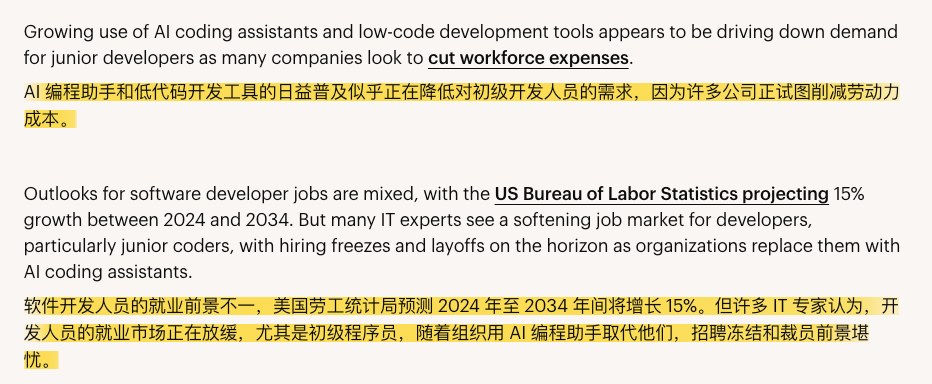
文章中,Addy引用了一项哈佛大学对对 6200 万工人研究的数据调查,调查显示:AI对于初级程序员的就业冲击非常大,而高级开发人员则几乎没受到影响。
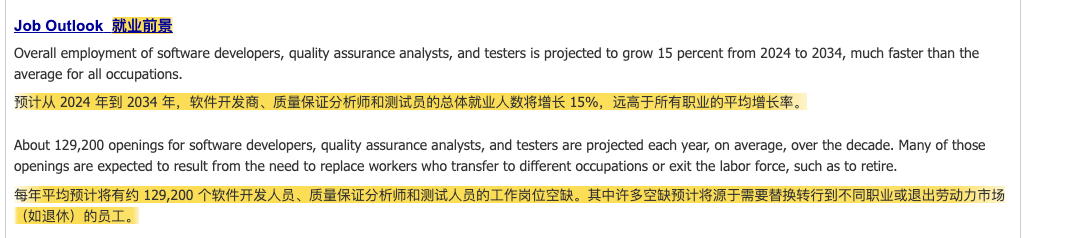
但同时,也有预测数据则表达了相当乐观的结果。作者在一篇文章中看到:美劳工统计局认为,软件职位整体将在十年内增长15%。(理由是:AI将软件扩展到医疗、金融等行业,创造更多“AI原生”初级职位???)
 Demand for junior developers softens as AI takes over
 US Bureau of Labor Statistics
Addy认为,问题更深一层的焦点,则在于技能转变和角色演变。
那该如何转变呢?他给出了自己的核心洞见。
在他看来,接下来,开发者需掌握 AI 提示工程与人类判断力相结合,成为高层次的系统编排者,避免沦为“代码清洁工”角色。
具体而言,他建议初级开发者构建 AI 集成作品集;一开始就要使用AI学习,但注意要手动编写关键算法;优先学习CS基础如数据结构和测试;此外,要寻求非编码任务如管道设置;提升沟通能力等等。
而对于资深开发者,则需要注重架构审查,以适应“代理式”工程环境;专注于集成和导师的角色;发展产品感;映射技能并水平扩展;将专长与新上下文整合;倡导跨职能发展等。
而对于大学本科计算机专业还有必要读吗?Addy认为还有必要,但仅限于一张文凭,更多的专业知识还是需要自己在课外补充训练。
总之,在AI把整个软件行业冲击的七零八落的时候,持续学习、保持创造力就是唯一的办法。
The Next Two Years of Software Engineering
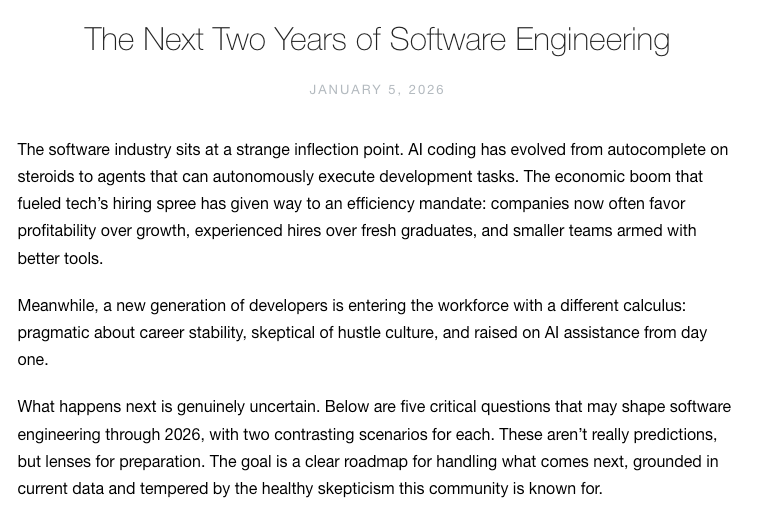
The software industry sits at a strange inflection point. AI coding has evolved from autocomplete on steroids to agents that can autonomously execute development tasks. The economic boom that fueled tech’s hiring spree has given way to an efficiency mandate: companies now often favor profitability over growth, experienced hires over fresh graduates, and smaller teams armed with better tools.
软件行业正处于一个微妙的拐点。AI 编程已经从“强化版的自动补全”演变成了能够自主执行开发任务的智能体(Agents)。曾经助长技术行业招聘热潮的经济繁荣,如今已让位于“效能至上”的准则:公司现在往往看重盈利而非增长,看重资深雇员而非应届毕业生,以及配备了更精良工具的小型团队。
Meanwhile, a new generation of developers is entering the workforce with a different calculus: pragmatic about career stability, skeptical of hustle culture, and raised on AI assistance from day one.
与此同时,新一代开发者正带着不同的职业逻辑进入职场:他们对职业稳定性持务实态度,对“奋斗文化”(hustle culture)持怀疑态度,且从入行第一天起就是在 AI 辅助下成长起来的。
What happens next is genuinely uncertain. Below are five critical questions that may shape software engineering through 2026, with two contrasting scenarios for each. These aren’t really predictions, but lenses for preparation. The goal is a clear roadmap for handling what comes next, grounded in current data and tempered by the healthy skepticism this community is known for.
接下来的走向确实充满了不确定性。以下是五个可能塑造 2026 年软件工程的关键问题,每个问题都对应两个截然不同的情景。这些并非真正的预言,而是观察准备工作的不同视角。我们的目标是基于当前数据,并结合技术社区特有的理性怀疑精神,为应对未来挑战制定一份清晰的路线图。
1. The Junior developer question
一、企业还需要初级工程师吗?
The bottom line: Junior developer hiring could collapse as AI automates entry-level tasks, or rebound as software spreads into every industry. Both futures require different survival strategies.
核心结论:初级开发者的招聘可能会因为 AI 自动化了入门级任务而崩盘,也可能因为软件渗透到各行各业而反弹。这两种未来走向需要截然不同的生存策略。
The traditional pathway of “learn to code, get junior job, grow into senior” is wobbling. A Harvard study of 62 million workers found that when companies adopt generative AI, junior developer employment drops by about 9-10% within six quarters, while senior employment barely budges. Big tech hired 50% fewer fresh graduates over the past three years. As one engineer cynically put it: ~”Why hire a junior for $90K when an AI coding agent costs less?”
“学习编程、入职初级岗位、成长为资深开发”的传统路径正变得摇摇欲坠。哈佛大学对 6200 万名员工的一项研究发现,当公司采用生成式 AI 时,初级开发者的就业人数在六个季度内下降了约 9-10%,而资深职位的就业人数几乎纹丝不动。过去三年,科技巨头招收的应届毕业生减少了 50%。正如一位工程师讽刺地说道:“既然 AI 编程智能体的成本更低,为什么还要花 9 万美元雇个初级开发呢?”
This isn’t just AI. Macro factors like rising interest rates and post-pandemic corrections hit around 2022, before AI tools became widespread. But AI has accelerated the trend. A single senior engineer with AI assistance can now produce what used to require a small team. Companies are quietly not hiring juniors more than they’re firing anyone.
这不仅仅是 AI 的原因。宏观因素(如利率上升和 2022 年左右出现的疫情后市场回调)在 AI 工具普及之前就已经产生冲击。但 AI 加速了这一趋势。一名配备 AI 辅助的资深工程师,现在产出的工作量相当于过去的一个小团队。与其说公司在裁员,不如说他们更多是在悄无声息地停止招收初级员工。
The flip scenario: AI unlocks massive demand for developers across every industry, not just tech. Healthcare, agriculture, manufacturing, and finance all start embedding software and automation. Rather than replacing developers, AI becomes a force multiplier that spreads development work into domains that never employed coders. We’d see more entry-level roles, just different ones: “AI-native” developers who quickly build automations and integrations for specific niches.
另一种反转的情景:AI 释放了各行各业对开发者的巨大需求,而不仅仅局限于科技行业。医疗、农业、制造业和金融业都开始嵌入软件和自动化。AI 不再是取代开发者,而是成为一种“力量倍增器”,将开发工作推向那些从未雇佣过程序员的领域。我们将看到更多的入门级岗位,只是形式有所不同:即那些能够为特定细分领域快速构建自动化和集成方案的“AI 原生”开发者。
The Bureau of Labor Statistics still projects ~15% growth in software jobs from 2024 to 2034. If businesses use AI to expand output rather than strictly cut headcount, they’ll need humans to seize the opportunities AI creates.
美国劳工统计局仍预计 2024 年至 2034 年间,软件类岗位将增长约 15%。如果企业利用 AI 是为了扩大产出而非严格削减员工人数,他们将需要人类来捕捉 AI 创造的各种机遇。
The long-term risk of the pessimistic scenario is often overlooked: today’s juniors are tomorrow’s senior engineers and tech leaders. Cut off the talent pipeline entirely and you create a leadership vacuum in 5-10 years. Industry veterans call this the “slow decay”: an ecosystem that stops training its replacements.
悲观情景下的长期风险往往被人们忽视:今天的初级开发就是明天的资深工程师和技术领袖。如果彻底切断人才管道,5 到 10 年后就会出现领导力真空。业内资深人士称之为“慢性凋零”:一个停止培养接班人的生态系统。
What to do about it:
应对之道:
Junior developers: Make yourself AI-proficient and versatile. Demonstrate that one junior plus AI can match a small team’s output. Use AI coding agents (Cursor/Antigravity/Claude Code/Gemini CLI) to build bigger features, but understand and explain every line if not most. Focus on skills AI can’t easily replace: communication, problem decomposition, domain knowledge. Look at adjacent roles (QA, DevRel, data analytics) as entry points. Build a portfolio, especially projects integrating AI APIs. Consider apprenticeships, internships, contracting, or open source. Don’t be “just another new grad who needs training”; be an immediately useful engineer who learns quickly.
(1.1) 初级开发者:
Senior developers: Fewer juniors means more grunt work landing on your plate. Lean on automation for routine tasks, but don’t do everything yourself. Set up CI/CD, linters, and AI-assisted testing to catch basic issues. Mentor unofficially through open source or coaching colleagues in other departments. Be frank with management about the risks of all-senior teams. If junior demand rebounds, be ready to onboard effectively and delegate in ways that use AI. Your value is in multiplying the whole team’s output, not just your own code.
(1.2) 资深开发者:
2. The Skills question
二、技能的问题:程序员的基本功被废掉了吗?
The bottom line: Core programming skills could atrophy as AI writes most code, or become more critical than ever as human developers focus on oversight. The coming years determine whether we trade understanding for speed.
核心结论:随着 AI 编写了大部分代码,核心编程技能可能会逐渐萎缩;但也可能因为人类开发者转向监督角色,而变得比以往任何时候都更加关键。未来几年将决定我们是否会为了追求速度而牺牲对技术的深度理解。
84% of developers now use AI assistance regularly. For many, the first instinct when facing a bug or new feature isn’t to write code from scratch, but to compose a prompt and stitch together AI-generated pieces. Entry-level coders are skipping the “hard way”: they might never build a binary search tree from scratch or debug a memory leak on their own.
目前,84% 的开发者会定期使用 AI 辅助。对许多人来说,面对 Bug 或新功能时的第一反应不再是从零开始写代码,而是撰写提示词(Prompt)并将 AI 生成的代码片段拼凑在一起。入门级程序员正在跳过那些“笨方法”:他们可能永远不会亲手构建二叉搜索树,也不会独自调试内存泄漏问题。
The skillset is shifting from implementing algorithms to knowing how to ask the AI the right questions and verify its output. The first rung of the ladder now demands prompting and validating AI rather than demonstrating raw coding ability. Some senior engineers worry this produces a generation who can’t code well independently, a kind of deskilling. AI-generated code introduces subtle bugs and security vulnerabilities that less-experienced developers might miss.
技能树正在发生转移:从实现算法转向如何向 AI 提出正确的问题并验证其输出。职业阶梯的第一级现在要求的是提示(Prompting)和验证 AI 的能力,而非展示原生编码能力。一些资深工程师担心,这会造就出无法独立编写高质量代码的一代人,导致某种程度的“技能退化”(deskilling)。AI 生成的代码往往带有细微的 Bug 和安全漏洞,而缺乏经验的开发者很容易忽略这些问题。
The counter-scenario: as AI handles the routine 80%, humans focus on the hardest 20%. Architecture, tricky integrations, creative design, edge cases: the problems machines alone can’t solve. Rather than making deep knowledge obsolete, AI’s ubiquity makes human expertise more important than ever. This is the “high-leverage engineer” who uses AI as a force multiplier but must deeply understand the system to wield it effectively.
另一种相反的情景是:当 AI 处理了 80% 的常规任务,人类将专注于最难的 20%。架构设计、复杂的集成、创意设计、边缘情况——这些都是机器无法独立解决的问题。AI 的普及非但没有让深度知识过时,反而使人类的专业洞察力变得前所未有的重要。这就是所谓的“高效率工程师”,他们将 AI 视为力量倍增器,但必须对系统有深刻理解才能有效地驾驭它。
If everyone has AI coding agent access, what distinguishes great developers is knowing when the AI is wrong or suboptimal. As one senior engineer put it: “The best software engineers won’t be the fastest coders, but those who know when to distrust AI.”
如果每个人都能使用 AI 编程助手,那么区分优秀开发者的标准就是——能否识别出 AI 在何时犯错或给出了次优方案。正如一位资深工程师所言:“最优秀的软件工程师不再是写代码最快的人,而是那些知道何时不该信任 AI 的人。”
Programming shifts: less typing boilerplate, more reviewing AI output for logical errors, security flaws, and mismatches with requirements. Critical skills become software architecture, system design, performance tuning, and security analysis. AI can produce a web app quickly, but an expert engineer ensures the AI followed security best practices and didn’t introduce race conditions.
编程模式正在转变:减少了重复性的样板代码编写,增加了对 AI 输出的逻辑错误、安全缺陷以及需求匹配度的审查。核心技能转变为:软件架构、系统设计、性能调优和安全分析。AI 可以快速生成一个 Web 应用,但只有专家级工程师才能确保 AI 遵循了安全最佳实践,且没有引入竞态条件(race conditions)。
Developer discourse in 2025 was split. Some admitted they hardly ever write code “by hand” and think coding interviews should evolve. Others argued that skipping fundamentals leads to more firefighting when AI’s output breaks. The industry is starting to expect engineers to bring both: AI speed and foundational wisdom for quality.
2025 年的开发者舆论呈现出两极分化。一些人承认他们几乎不再“手写”代码,并认为编程面试也应随之演进;另一些人则认为,跳过基础知识会导致在 AI 输出崩溃时陷入更多的“救火”窘境。整个行业开始期待工程师能兼具两者:既有 AI 带来的速度,又有保障质量的底层智慧。
What to do about it:
应对之道:
Junior developers: Use AI as a learning tool, not a crutch. When AI coding agents (Cursor/Antigravity/Claude Code/Gemini CLI) suggest code review why it works, identify weaknesses. Occasionally disable your AI helper and write key algorithms from scratch. Prioritize CS fundamentals: data structures, algorithms, complexity, memory management. Implement projects twice, once with AI, once without, and compare. Learn prompt engineering and tool mastery. Train yourself in rigorous testing: write unit tests, read stack traces without immediately asking AI, get comfortable with debuggers. Deepen complementary skills AI can’t replicate: system design, user experience intuition, concurrency reasoning. Show you can both crank out solutions with AI and tackle thorny issues when it fails.
(2.1) 初级开发者:
Senior developers: Position yourself as the guardian of quality and complexity. Sharpen your core expertise: architecture, security, scaling, domain knowledge. Practice modeling systems with AI components and think through failure modes. Stay current on vulnerabilities in AI-generated code. Embrace your role as mentor and reviewer: define where AI use is acceptable and where manual review is mandatory (payment or safety code). Lean into creative and strategic work; let the junior+AI combo handle routine API hookups while you decide which APIs to build. Invest in soft skills and cross-domain knowledge. Stay current on new tools and best practices. Double down on what makes a human developer indispensable: sound judgment, system-level thinking, and mentorship.
(2.2) 资深开发者:
3. The Role question
三、开发者会沦为“代码清洁工”吗?
The bottom line: The developer role could shrink into limited auditing (overseeing AI-generated code) or expand into a pivotal orchestrator position designing and governing AI-driven systems. Either way, adding value means more than just coding.
核心结论:开发者的角色可能会缩减为受限的审计工作(监督 AI 生成的代码),也可能会扩展为设计和治理 AI 驱动系统的关键编排者。无论哪种方式,创造价值都意味着不仅仅是编写代码。
The extremes here are stark. In one vision, developers see their creative responsibilities diminished. Rather than building software, they mostly audit and babysit AI outputs. AI systems (or “citizen developers” using no-code platforms) handle production; human developers review auto-generated code, check for errors, bias, or security issues, and approve deployments. Maker becomes checker. The joy of code creation replaced by the anxiety of risk management.
这里的极端情况十分明显。在一种设想中,开发人员认为自己的创造责任被削弱了。他们不再负责软件的开发,而更多的是对人工智能的输出进行审查和监管。AI 系统(或使用无代码平台的“平民开发者”)负责开发;人类开发者审查自动生成的代码,检查错误、偏见或安全问题,并批准部署。创造者变成了检查员。代码创作的乐趣被风险管理的焦虑所取代。
There are reports of engineers spending more time evaluating AI-generated pull requests and managing automated pipelines, less time crafting code from scratch. Programming feels less like creative problem-solving and more like compliance. As one engineer lamented: “I don’t want to end up as a code janitor, cleaning up what the AI throws over the wall.”
有报道称,工程师们花在评估 AI 生成的拉取请求(Pull Requests)和管理自动化流水线上的时间越来越多,而花在从零开始编写代码上的时间却在减少。编程感觉不再像创造性的问题解决,而更像是一种合规性工作。正如一位工程师哀叹道:“我不想最后变成代码清洁工,专门清理 AI 扔过来的垃圾。”
The alternative future is far more interesting: developers evolve into high-level orchestrators, combining technical, strategic, and ethical responsibilities. AI “workers” mean human developers take on an architect or general contractor role, designing the overall system, deciding which tasks go to which AI or software component, weaving solutions from many moving parts.
另一种未来的可能性则有趣得多:开发者进化为高阶编排者,集技术、战略和伦理职责于一身。AI“劳动力”的出现意味着人类开发者承担起架构师或总承包商的角色,负责设计整体系统,决定哪些任务分配给哪个 AI 或软件组件,并将众多变动的模块织成完整的解决方案。
A CEO of a low-code platform articulated this vision: in an “agentic” development environment, engineers become “composers,” orchestrating ensembles of AI agents and software services. They won’t write every note themselves, but they define the melody: architecture, interfaces, how agents interact. This role is interdisciplinary and creative: part software engineer, part system architect, part product strategist.
一位低代码平台的 CEO 阐述了这一愿景:在“自主化”(agentic)开发环境中,工程师变成了“作曲家”,编排着 AI 代理和软件服务的合奏。他们不会亲自谱写每一个音符,但他们定义了旋律:架构、接口以及代理之间的交互方式。这个角色是跨学科且富有创造力的:既是软件工程师,又是系统架构师,还是产品策略师。
The optimistic take: as AI handles rote work, developer roles shift toward higher-value activities by necessity. Jobs may become more interesting. Someone has to decide what the AI should build, verify the product makes sense, and continuously improve it.
乐观的看法是:由于 AI 处理了重复性劳动,开发者的角色必然会转向更高价值的活动。工作可能会变得更有趣。总得有人决定 AI 应该构建什么,验证产品是否合乎逻辑,并持续进行改进。
Which way it goes may depend on how organizations choose to integrate AI. Companies that see AI as labor replacement might trim dev teams and ask remaining engineers to keep automations running. Companies that see AI as a way to amplify their teams might keep headcounts similar but have each engineer deliver more ambitious projects.
走向何方可能取决于组织选择如何集成 AI。将 AI 视为劳动力替代品的公司可能会裁减开发团队,并要求留下的工程师维持自动化运行。而将 AI 视为团队放大工具的公司可能会保持相近的人员规模,但让每位工程师交付更具雄心的项目。
What to do about it:
应对之道:
Junior developers: Seek opportunities beyond just writing code. Volunteer for test case writing, CI pipeline setup, or application monitoring: skills aligned with an auditor/custodian role. Keep your creative coding alive through personal projects so you don’t lose the joy of building. Develop a systems mindset: learn how components communicate, what makes APIs well-designed. Read engineering blogs and case studies of system designs. Familiarize yourself with AI and automation tools beyond code generation: orchestration frameworks, AI APIs. Improve communication skills, written and verbal. Write documentation as if explaining to someone else. Ask senior colleagues not just “Does my code work?” but “Did I consider the right things?” Prepare to be verifier, designer, and communicator, not just coder.
(3.1) 初级开发者:
Senior developers: Lean into leadership and architectural responsibilities. Shape the standards and frameworks that AI and junior team members follow. Define code quality checklists and ethical AI usage policies. Stay current on compliance and security topics for AI-produced software. Focus on system design and integration expertise; volunteer to map data flows across services and identify failure points. Get comfortable with orchestration platforms (Kubernetes, Airflow, serverless frameworks, agent orchestration tools). Double down on your role as technical mentor: more code reviews, design discussions, technical guidelines. Hone your ability to quickly assess someone else’s (or something’s) code and give high-level feedback. Develop product and business sense; understand why features get built and what customers care about. Shadow a product manager or join customer feedback sessions. Protect your creative passion through prototypes, hackathons, or emerging tech research. Evolve from coder to conductor.
(3.2) 资深开发者:
4. The Specialist vs. Generalist question
四、专才将死, 通才走红
The bottom line: Narrow specialists risk finding their niche automated or obsolete. The fast-changing, AI-infused landscape rewards T-shaped engineers: broad adaptability with one or two deep skills.
核心结论:过于单一的专业人员面临着其细分领域被自动化或淘汰的风险。在瞬息万变、AI 渗透的行业格局下,能够获得回报的是 T 型工程师:具备广泛的适应性,并拥有一到两项深度技能。
Given how quickly models, tools and frameworks rise and fall, betting your career on a single technology stack is risky. A guru in a legacy framework might suddenly find themselves in less demand when a new AI tool handles that tech with minimal human intervention. Developers who specialize narrowly in “a single stack, framework or product area” might wake up to find that area declining or redundant.
考虑到模型、工具和框架兴替的速度之快,将职业生涯押注在单一技术栈上是极具风险的。一位精通旧框架的大师可能会突然发现,当新的 AI 工具只需极少人工干预就能处理该技术时,市场对他们的需求锐减。那些专注于“单一技术栈、框架或产品领域”的开发者,醒来时可能会发现该领域正在衰落或已变得多余。
Think of COBOL developers, Flash developers, or mobile game engine specialists who didn’t pivot when the industry moved. What’s different now is the pace of change. AI automation can make certain programming tasks trivial, undercutting roles that revolved around those tasks. A specialist who only knows one thing (fine-tuning SQL queries, slicing Photoshop designs into HTML) could find AI handling 90% of that work.
想想那些在行业转型时没有及时转型的 COBOL 开发者、Flash 开发者或移动游戏引擎专家。现在的不同之处在于变革的速度。AI 自动化可以让某些编程任务变得微不足道,从而削减围绕这些任务设立的职位。一个只懂单一技能(如微调 SQL 查询,或将 Photoshop 设计稿切图为 HTML)的专家,可能会发现 AI 已经能处理其中 90% 的工作。
Hiring managers chase the newest niche. A few years ago everyone wanted cloud infrastructure specialists; now there’s a surge in AI/ML engineers. Those who specialized narrowly in yesterday’s technology feel stalled as that niche loses luster.
招聘经理们总是在追逐最新的细分领域。几年前,人人都想要云基础设施专家;现在,AI/ML 工程师的需求激增。那些在昨天的技术中钻牛角尖的人,随着该领域光彩渐失,会感到职业陷入停滞。
The opposite outcome is specialization in a new form: the “versatile specialist” or T-shaped developer. Deep expertise in one or two areas (the vertical stroke), broad familiarity with many others (the horizontal stroke). These engineers become the “glue” in multidisciplinary teams; they communicate with specialists of other stripes and fill gaps when needed.
相反的结果是出现了一种新形式的专业化:即“多面手”或“T 型开发者”。在这一两个领域拥有深厚造诣(纵向),同时对许多其他领域有广泛了解(横向)。这些工程师成为了跨学科团队中的“粘合剂”;他们能与其他领域的专家沟通,并在需要时填补空白。
Companies no longer want developers who are either too shallow or too narrowly focused; they want a strong core competency plus ability to work across the stack. Part of the reason is efficiency: a T-shaped engineer can often solve problems end-to-end without waiting on handoffs. Part is innovation: cross-pollination of knowledge leads to better solutions.
公司不再需要那些要么过于浅薄、要么过于狭隘的开发者;他们需要的是拥有强大的核心胜任力,并能跨栈工作的能力。部分原因在于效率:T 型工程师通常可以端到端地解决问题,而无需等待交接。部分原因在于创新:知识的跨界融合会催生出更好的解决方案。
AI tools actually augment generalists more, making it easier for one person to handle multiple components. A back-end engineer can rely on AI help to create a reasonable UI; a front-end specialist can have AI generate server boilerplate. An AI-rich environment lets people operate more broadly. Meanwhile, deep specialists might find their niche partly automated with no easy way to branch out.
实际上,AI 工具对全才的增强作用更明显,使一个人能更容易地处理多个组件。后端工程师可以依靠 AI 帮助创建合理的 UI;前端专家可以让 AI 生成服务器样板代码。在 AI 资源丰富的环境下,人们的工作范围可以更广。与此同时,深度专家可能会发现自己的细分领域已被部分自动化,且没有简单的方法可以拓展到其他领域。
Nearly 45% of engineering roles now expect proficiency in multiple domains: programming plus cloud infrastructure knowledge, or front-end plus some ML familiarity.
现在的工程职位中,近 45% 期望求职者精通多个领域:例如编程加云基础设施知识,或前端加一定的机器学习(ML)基础。
What to do about it:
应对之道:
Junior developers: Establish a broad foundation early. Even if hired for a specific role, peek outside that silo. If you’re doing mobile, learn backend basics; if you’re doing front-end, try writing a simple server. Learn the deployment process and tools like Docker or GitHub Actions. Identify one or two areas that genuinely excite you and go deeper: this becomes your vertical expertise. Brand yourself as a hybrid: “full-stack developer with cloud security focus” or “frontend developer with UX expertise.” Use AI tools to learn new domains quickly; when you’re a novice in backend, have ChatGPT generate starter API code and study it. Build the habit of continuous re-skilling. Participate in hackathons or cross-functional projects to force yourself into generalist mode. Tell your manager you want exposure to different parts of the project. Adaptability is a superpower early in your career.
(4.1) 初级开发者:
Senior developers: Map your skill graph: what are you expert in, what related domains have you only touched superficially? Pick one or two adjacent domains and commit to becoming conversant. If you’re a back-end database specialist, get comfortable with a modern front-end framework or learn ML pipeline basics. Do a small project in your weak area with AI assistance. Integrate your deep expertise with new contexts; if you specialize in web app performance, explore how those skills apply to ML inference optimization. Advocate for or design your role to be more cross-functional. Volunteer to be the “integration champion” for projects touching multiple areas. Mentor others to spread skills around while picking up something from them in return. Update your resume to reflect versatility. Use your experience to identify patterns and transferable knowledge. Become the T-shaped role model: deep in your specialty (giving authority and confidence) but actively stretching horizontally.
(4.2) 资深开发者:
5. The Education question
五、教育的问题:本科还有必要读吗?
The bottom line: Will a CS degree remain the gold standard, or will faster learning paths (bootcamps, online platforms, employer training) overtake it? Universities may struggle to keep up with an industry that changes every few months.
核心结论:计算机科学(CS)学位是否仍将是“黄金标准”,还是会被更快速的学习路径(如训练营、在线平台、企业培训)所取代?大学可能很难跟上这个每隔几个月就发生变革的行业步伐。
A four-year computer science degree has long been the primary ticket into software roles. But that tradition is being questioned.
长期以来,四年的计算机科学学位一直是进入软件开发岗位的首要门票。但这一传统正受到质疑。
One future: universities remain important but struggle to stay relevant. Degrees stay the default credential, but programs lag behind rapidly evolving needs, hampered by slow curriculum update cycles and bureaucratic approval processes. Students and employers feel academia is disconnected from industry, teaching theory or outdated practice that doesn’t translate to job skills.
一种未来走向:大学依然重要,但很难保持其相关性。学位仍是默认的凭证,但由于课程更新周期缓慢和官僚式的审批流程,教学方案滞后于飞速发展的需求。学生和雇主都感到学术界与行业脱节,所教授的理论或过时的实践无法转化为职场技能。
Recent grads report never learning about cloud computing, modern DevOps, or AI tooling during their degree. If universities demand high time and financial investment while delivering low-relevance education, they risk being seen as expensive gatekeepers. But many companies still require a bachelor’s degree out of inertia, so the burden shifts to students to fill the gap with bootcamps, online courses, and self-taught projects.
近期的毕业生反映,他们在攻读学位期间从未学习过云计算、现代 DevOps 或 AI 工具。如果大学在要求高额时间和资金投入的同时,只能提供相关性极低的教育,那么它们就有被视为“昂贵守门人”的风险。然而,由于惯性,许多公司仍然要求本科学位,因此填补技能空白的负担就转嫁到了学生身上,他们不得不通过训练营、在线课程和自学项目来补课。
Student loan debt is enormous, and companies spend billions training new grads because those grads lack skills needed in the workplace. Universities might add an AI ethics class here, a cloud computing elective there, but by the time they implement something, industry tools have moved on.
学生贷款债务数额巨大,而公司还要花费数十亿美元培训新员工,因为这些毕业生缺乏职场所需的技能。大学可能会在这里加一门 AI 伦理课,在那里加一门云计算选修课,但等他们落实这些课程时,行业的工具早已更新换代了。
The disruptive scenario: traditional education gets increasingly replaced by new systems. Coding bootcamps, online certifications, self-taught portfolios, employer-created training academies. Many high-profile employers (Google, IBM) have dropped degree requirements for certain technical roles. In 2024, nearly 45% of companies planned to eliminate bachelor’s degree requirements for at least some positions.
颠覆性的情景:传统教育逐渐被新系统取代。包括编程训练营、在线认证、自学作品集以及企业创办的培训学院。许多知名雇主(如 Google、IBM)已经取消了某些技术岗位的学位要求。到 2024 年,近 45% 的公司计划至少针对部分职位取消本科学位要求。
Bootcamps have matured. They produce grads who get hired at top companies alongside CS grads. These programs are shorter (12-week intensive) and focus on practical skills: current frameworks, cloud services, teamwork. The hiring currency is shifting toward live portfolios, micro-credentials, and verified skills. A strong GitHub portfolio or recognized certification can bypass degree requirements.
训练营已经成熟。他们培养的毕业生能与 CS 专业毕业生一起进入顶级公司。这些项目周期更短(12 周强化训练),并专注于实际技能:当前流行的框架、云服务以及团队协作。招聘的“硬通货”正在转向真实的作品集、微证书和经过验证的技能。一个强大的 GitHub 作品集或公认的认证可以绕过学位要求。
Employer-driven education is emerging: companies creating their own training pipelines or partnering with bootcamps. Some big tech companies have started internal “universities” for non-traditional candidates. AI itself offers new ways to learn: AI tutors, interactive coding sandboxes, personalized instruction outside university settings.
雇主驱动型教育正在兴起:公司建立自己的培训管道或与训练营合作。一些大型科技公司已经为非传统背景的候选人创办了内部“大学”。AI 本身也提供了全新的学习方式:AI 导师、交互式编程沙盒,以及脱离大学环境的个性化教学。
A modular ecosystem of learning is far more accessible than an expensive four-year degree. A kid in a country without strong CS universities can take the same Coursera courses and build the same portfolio as someone in Silicon Valley.
这种模块化的学习生态系统比昂贵的四年制学位更易获取。一个身处没有顶尖 CS 大学国家的孩子,可以修读与硅谷学生相同的 Coursera 课程,并构建出同样水平的作品集。
What to do about it:
应对之道:
Aspiring/junior developers: If in a traditional CS program, don’t rely on it exclusively. Augment coursework with real-world projects: build a web app, contribute to open source. Seek internships or co-ops. If your curriculum misses hot topics, learn them through online platforms. Earn industry-recognized certifications (GCP, AWS, Azure) to signal practical knowledge. If self-teaching or in a bootcamp, focus on a compelling portfolio: at least one substantial project with good documentation. Be active in the developer community: contribute to open source, write technical posts. Network through LinkedIn, meetups, dev events. Get an experienced developer to vouch for you. Keep learning continuously; the half-life of technical skills is short. Use AI as your personal tutor. Prove your skills in concrete ways: portfolio, certification, and ability to talk intelligently about your work will open doors.
(5.1) 有志于此的/初级开发者:
Senior developers and leaders: Your credential alone won’t carry you forever. Invest in continuous education: online courses, workshops, conferences, certifications. Validate your skills in new ways; be prepared for interviews that assess current competency through real problems. Maintain side projects with new tech. Reassess job requirements: do you really need a new hire to have a CS degree, or do you need certain skills and learning ability? Push for skills-first hiring to widen your talent pool. Support internal training programs or apprenticeship-style roles. Champion mentorship circles for junior devs without formal backgrounds. Engage with academia and alternatives: advisory boards, guest lectures, feedback on curriculum gaps. Reflect this in your own career growth: real-world achievements and continuous learning matter more than additional degrees.
(5.2) 资深开发者与领导者:
The Through-Line
唯一的主线:变化
These scenarios aren’t mutually exclusive. Reality will draw elements from all of them. Some companies will reduce junior hiring while others expand it in new domains. AI will automate routine coding while raising standards for the code humans touch. Developers might spend mornings reviewing AI outputs and afternoons crafting high-level architecture.
这些场景并非互斥。现实将是各方元素的交织:一些公司会缩减初级职位的招聘,而另一些公司则会在新兴领域扩大招聘。AI 将实现常规编码的自动化,与此同时,它也提高了对人类亲手编写代码的标准。未来的开发者,可能上午还在审查 AI 的输出结果,下午就投入到高层架构的设计之中。
The consistent thread: change is the only constant. By keeping a finger on technology trends (and skepticism around them), you avoid being caught off-guard by hype or doom. By updating skills, diversifying abilities, and focusing on uniquely human aspects (creativity, critical thinking, collaboration) you remain in the loop.
贯穿始终的主线是:唯有变化才是永恒。通过敏锐洞察技术趋势(并保持适度的怀疑),你就能避免在“盲目炒作”或“末日论”中措手不及。通过不断更新技能、拓展能力多样性,并专注于人类特有的特质(如创造力、批判性思维、协作能力),你将始终保持在核心圈内。
Whether the future brings a coding renaissance or a world where code writes itself, there will always be demand for engineers who think holistically, learn continuously, and drive technology toward solving real problems.
无论未来是迎来一场“编码复兴”,还是进入一个“代码自我编写”的世界,市场永远需要那些能够进行全局思考、持续学习并驱动技术解决实际问题的工程师。
The best way to predict the future is to actively engineer it.
预测未来最好的方式,就是亲手去构建它。
结语
从今天起,如果你还立志于从事软件行业,如果你是一名应届生,请开始储备你的创意AI集成作品吧,而如果你是一名老兵,架构方面的Taste以及跨职能映射的能力也需要锤炼起来!
Starting today, if you’re still determined to pursue a career in the software industry, and if you’re a recent graduate, begin building your portfolio of creative AI integration projects. And if you’re a senior, you’ll also need to strengthen your architectural taste and cross-functional mapping capabilities!
延伸阅读
- https://mp.weixin.qq.com/s/WMtuuFiDKs6yRWQAIaliEg
- https://addyosmani.com/blog/next-two-years/
- https://www.cio.com/article/4062024/demand-for-junior-developers-softens-as-ai-takes-over.html
- https://www.bls.gov/ooh/Computer-and-Information-Technology/Software-developers.htm
- https://www.youtube.com/watch?v=IMHneaMO-dg